
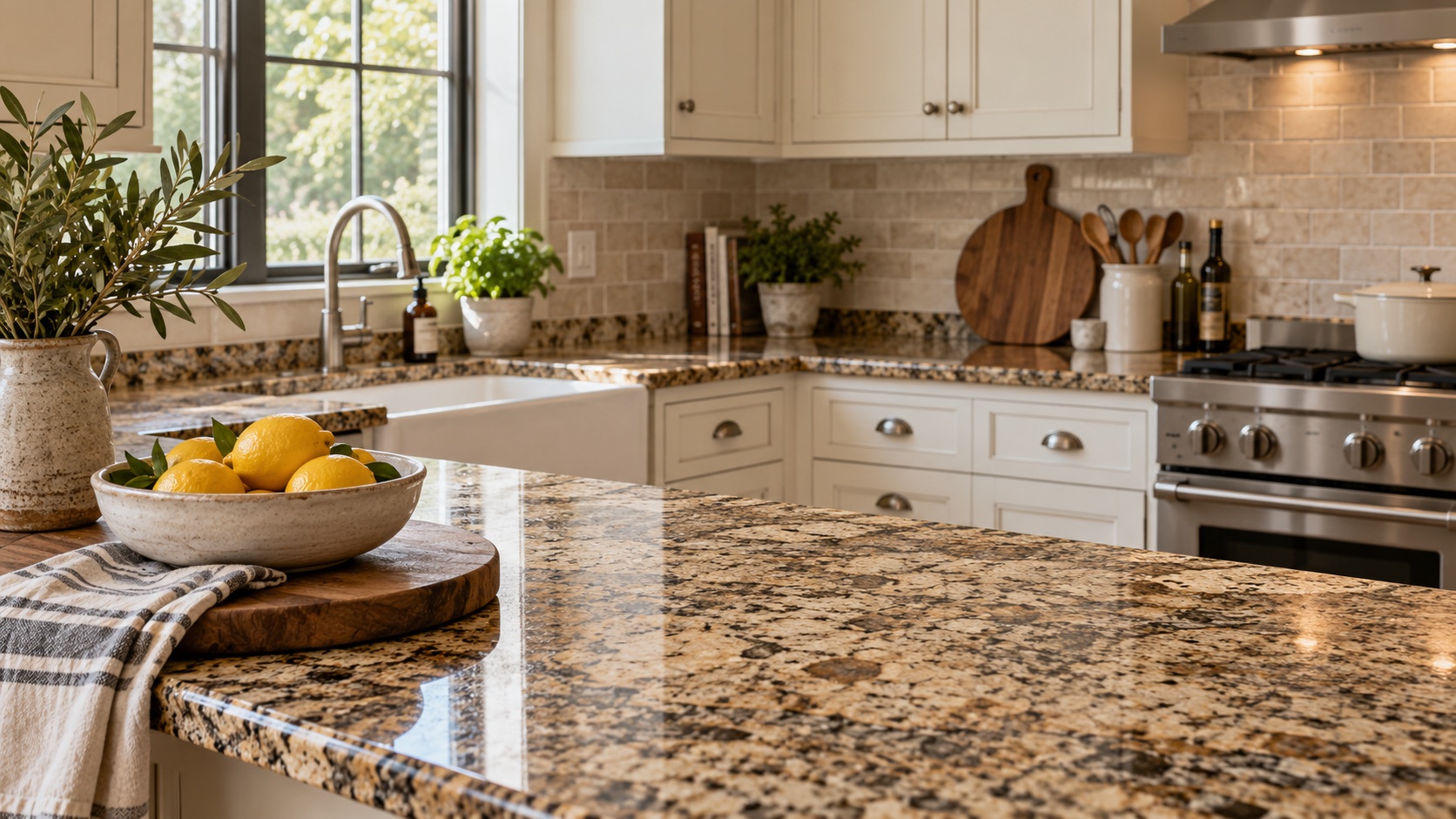
A countertop can be sound and still make you want a different kitchen. Before deciding that the granite has to go, look at the whole room: the countertop pattern, cabinet color, lighting, backsplash and everything stored on the worktop all contribute to what you see.
Keeping the stone is one option, not an obligation. The useful question is whether you can make a kitchen you enjoy around it, at a cost and level of disruption you accept.
1. Work out what feels dated
Clear a small section of counter and photograph the kitchen in daylight and with its usual lights on. Look at the stone on its own, then include the backsplash and cabinets. Is the objection the stone’s pattern, the color of the room, or simply visual clutter? Different people can look at the same speckled slab and see either character or a busy surface.
A quick reset can reveal the answer: put away loose appliances and accessories, clean with a stone-compatible product, and observe the counter at the times you normally cook. This is a way to diagnose your preference, not proof that decluttering will transform every room.
2. Separate the pattern from the finish
Granite varies in color and pattern. A quiet, pale slab may suit one person while a warmer, high-contrast stone feels more expressive to another. There is no universal point at which a pattern becomes outdated.
The finish changes the way light reflects from stone. Compare polished and honed finishes using actual samples, not only photographs. A leathered surface has texture that can affect day-to-day cleaning. If you are thinking about changing an installed finish, ask a stone restoration professional to inspect the slab, explain the work and show a representative sample. A different finish will not remove the stone’s underlying pattern.
3. Try the surroundings in stages
Start with changes you can reverse. Clear the worktop, then place a few items back where they are useful. Try a different bulb within the fixture’s specifications or compare lighting samples in the room; avoid judging color under store lighting alone.
Next, hold hardware and backsplash samples against the granite and cabinet doors. Place them beside the most distinctive areas of the stone and look again in morning and evening light. A small sample can help rule out a mismatch, although a full installation may look different.
Backsplash replacement and cabinet refinishing are larger jobs. Get an itemized estimate, ask how the existing countertop edge and walls will be protected, and check whether your preferred result requires work on electrical fittings or plumbing. Renters should obtain the owner’s permission before permanent changes.
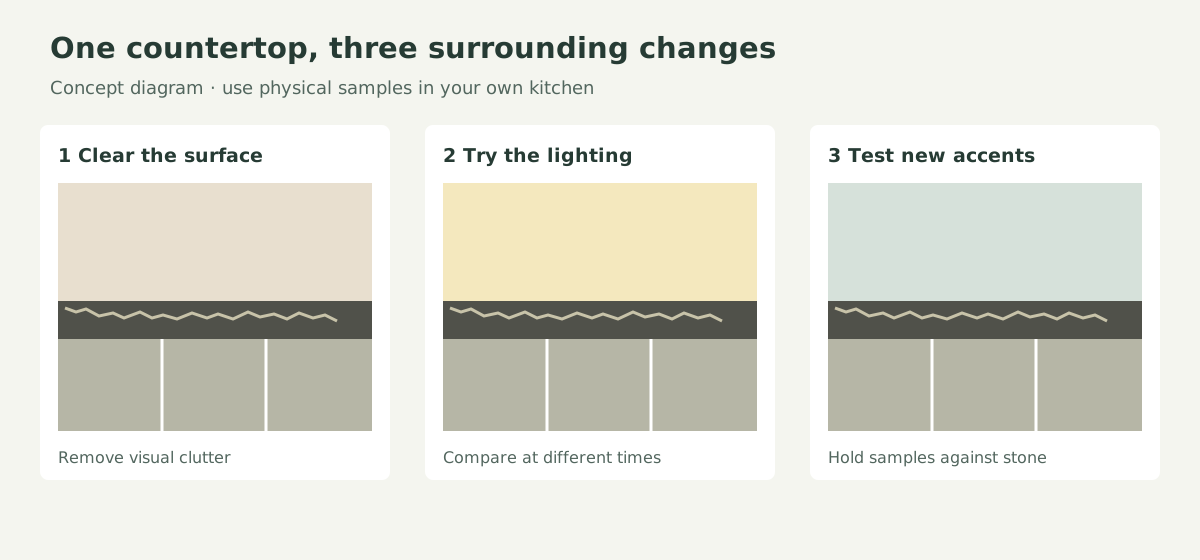
Concept diagram: the countertop stays the same while surrounding choices change.
4. Check the countertop before investing around it
Look for loose areas, movement, substantial cracks and sink support problems. A changing crack or loose stone deserves an assessment by an experienced stone professional before decorating or loading the area. Stains and small chips may be treatable, but a photograph cannot establish the cause or repair outcome. Ask for the proposed scope and likely visible repair lines before approving work.
Consider the life you expect from the kitchen. If the cabinets and layout are also due for major work, replacing the counter as part of that project may make sense. If the layout works and the granite is stable, a staged restyle lets you evaluate each change before committing to the next.
5. Put your own preferences first
Ask each regular user what bothers them. Is it one cabinet color, glare from the lighting, or the granite itself? If the pattern remains the thing everyone notices after trying samples, replacing it may be the more satisfying choice. Conversely, if one surrounding change resolves the problem for your household, you can stop there.
For a home you plan to sell, consider the whole kitchen and local buyer expectations rather than assuming that one material will determine the result. Compare estimates and disruption with your expected use of the room.
6. Compare materials only if replacing
Use the granite versus quartz guide as a starting point and compare the actual slabs or product ranges offered. Natural stone varies; quartz surfaces are manufactured and their care instructions depend on the product.
The Natural Stone Institute recommends trivets for stone and explains that an impregnating sealer makes a surface more resistant to staining, not stain-proof. Caesarstone’s care instructions likewise recommend protection from heat and using a cutting board for its surfaces. Ask each supplier for the written care and warranty terms for your selected product.
7. Price the complete project
Request separate quotes for the changes you are considering. A surrounding update may involve materials, labor and electrical or cabinet work; replacement may also involve removal, disposal, sink and plumbing reconnection, backsplash repairs and fabrication. The relative cost depends on the actual scope, so compare complete written proposals rather than a single square-foot figure.
Ask what happens to the old stone and who handles it. Reuse may be possible in some installations, but removal without damage and a suitable destination cannot be assumed.
8. Make the decision
- Check for movement, damage and sink support issues; arrange a professional assessment where needed.
- Test a clear counter, lighting and physical finish samples with the existing slab.
- Decide whether the pattern itself is acceptable in the room you want.
- Ask about care requirements and any proposed refinishing before committing.
- Compare complete quotes, including removal, repairs and disposal, if replacement remains attractive.
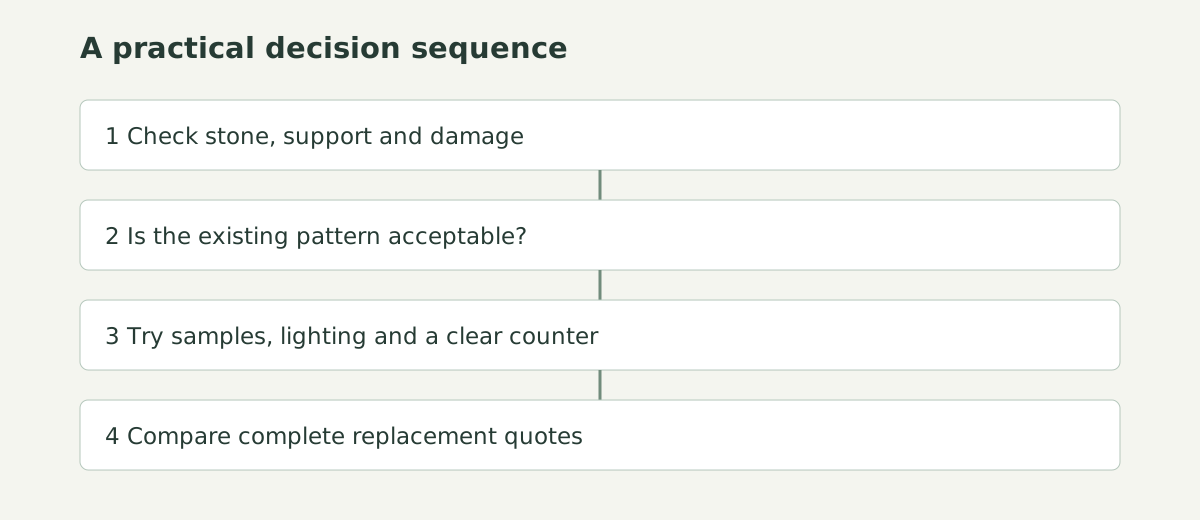
Decision diagram: check condition first, then test the surroundings before comparing replacement options.
Sources
- Reddit discussion · r/interiordecorating · 394 comments
- Natural Stone Institute: Care and Cleaning of Natural Stone
- Caesarstone: Care and Maintenance
- Rose Restoration: Granite Restoration
Questions & discussion
Share a question or a useful experience about this guide. Comments appear immediately. Your name and comment are public. Email is optional and stays private; reply emails are not enabled yet. Comment privacy.